
What you didn't know about flight numbers!
Flight numbers look simple, but when we analyzed the data, we saw a very different pattern. The same number can represent different routes, sometimes at the same time. Here’s why that happens and how often.
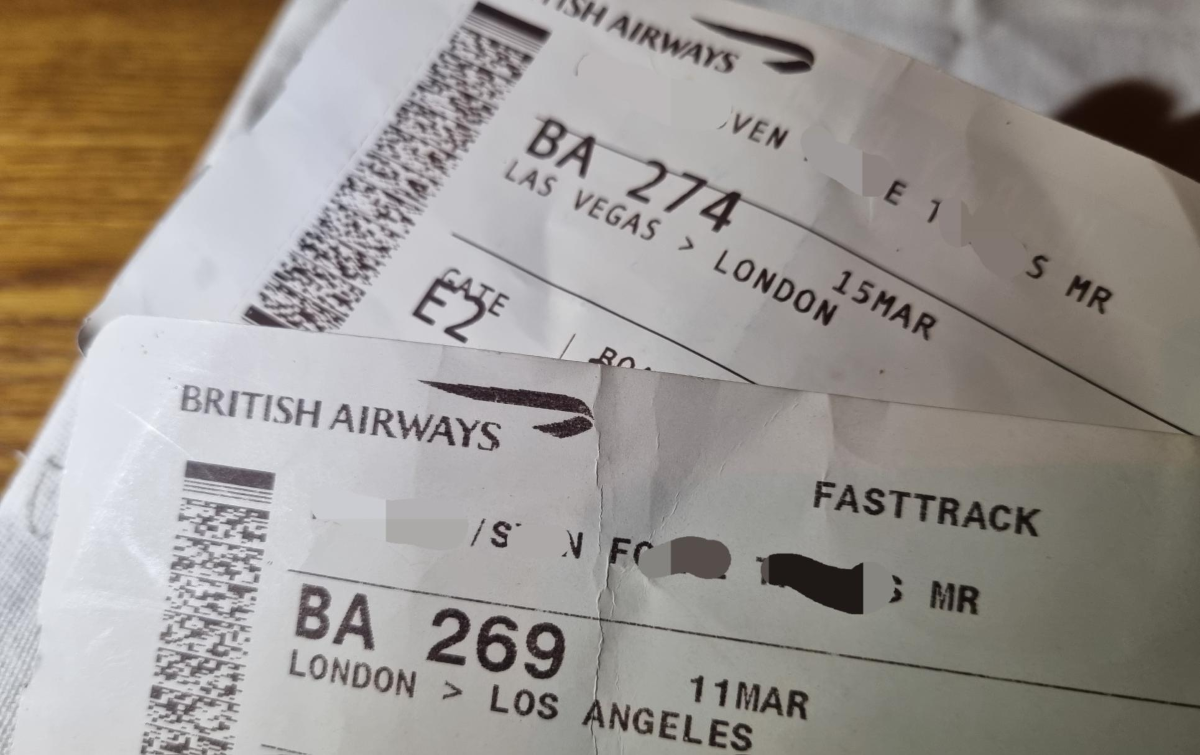
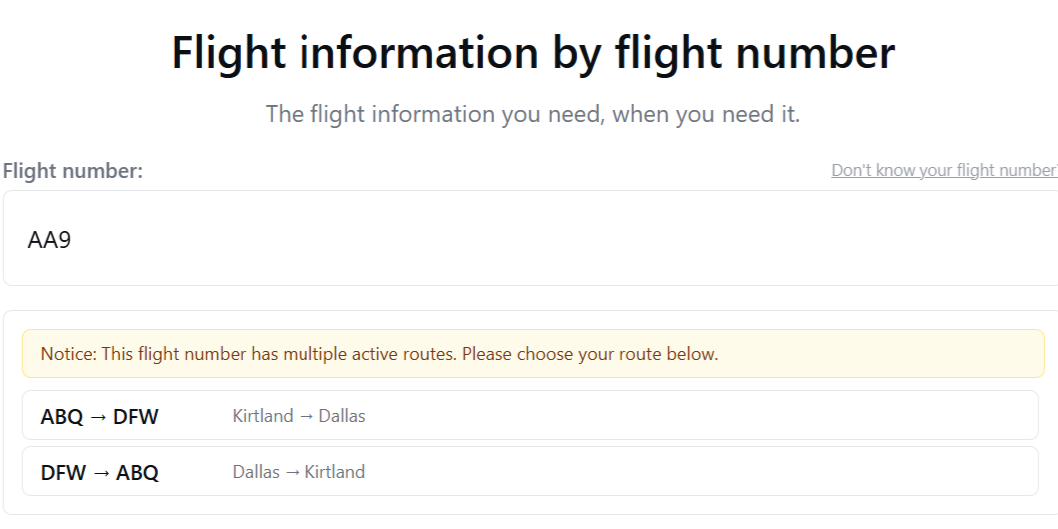
- Flight numbers are not unique per route; they are reused.
- ≈20 % of all flight numbers have more than one route.
- Reuse happens both simultaneously and between seasons.
The basic rules for flight numbers were set in the 1930s, as IATA began to take shape. What once was enough has, over time, become a challenge.
The four-digit format means each airline has a maximum of 9 999 flight numbers to work with, because leading zeros are ignored (AA0001 = AA1). In our database, several large airlines use a very large share of these. To name a few of the biggest: Ryanair 8 052, American Airlines 6 210, easyJet 5 612, and Delta Air Lines 5 006 unique flight numbers.
When flight numbers first appeared at airports, they were often shown on mechanical split-flap displays. Each slot was physical and fixed to a limited number of characters. Four digits were enough and became the standard.
On paper, adding one more digit would have been simple. The real limitation came later, when the four-digit format was baked into thousands of physical displays and then into digital systems worldwide. Once the infrastructure was in place, the format became effectively permanent.
It becomes even clearer in the top list:
 Ryanair (FR)
 American (AA)
 easyJet (U2)
 Delta (DL)
 Southwest (WN)
 United (UA)
 China Eastern (MU)
 China Southern (CZ)
 IndiGo (6E)
 Allegiant (G4)
Some numbers disappear for other reasons. Some are avoided for cultural reasons (e.g., 13, 4, or 666), and others become strongly associated with serious events or accidents (for example MH17, MH370, PA103, AA11, and UA175, among many others), which sometimes leads airlines to change or retire those numbers.
As the pool of flight numbers becomes constrained, airlines make practical choices. One of those is to reuse numbers over time or across routes. This is not an exception, but a natural consequence of how the system is built.
A flight number is therefore not intended to function as a unique ID for a specific flight. It is a commercial label used in timetables, booking systems, and customer-facing information, and it always requires context in the form of date and route.
In practice, this means the same flight number can appear on multiple routes, and in some cases even on the same day, without anything being wrong.
What our data shows
All figures below are based on scheduled data and reflect patterns, not individual flights.
| Total flight numbers | 174 745 |
| Non‑unique (multiple routes) | 34 343 (≈19.65 %) |
| Simultaneous routes | 30 997 |
| Seasonal route swaps (no overlap) | 3 346 |
| Out-and-back on same route (A↔B) | 9 424 |
| Multileg chains (A→B→C) | 22 584 |
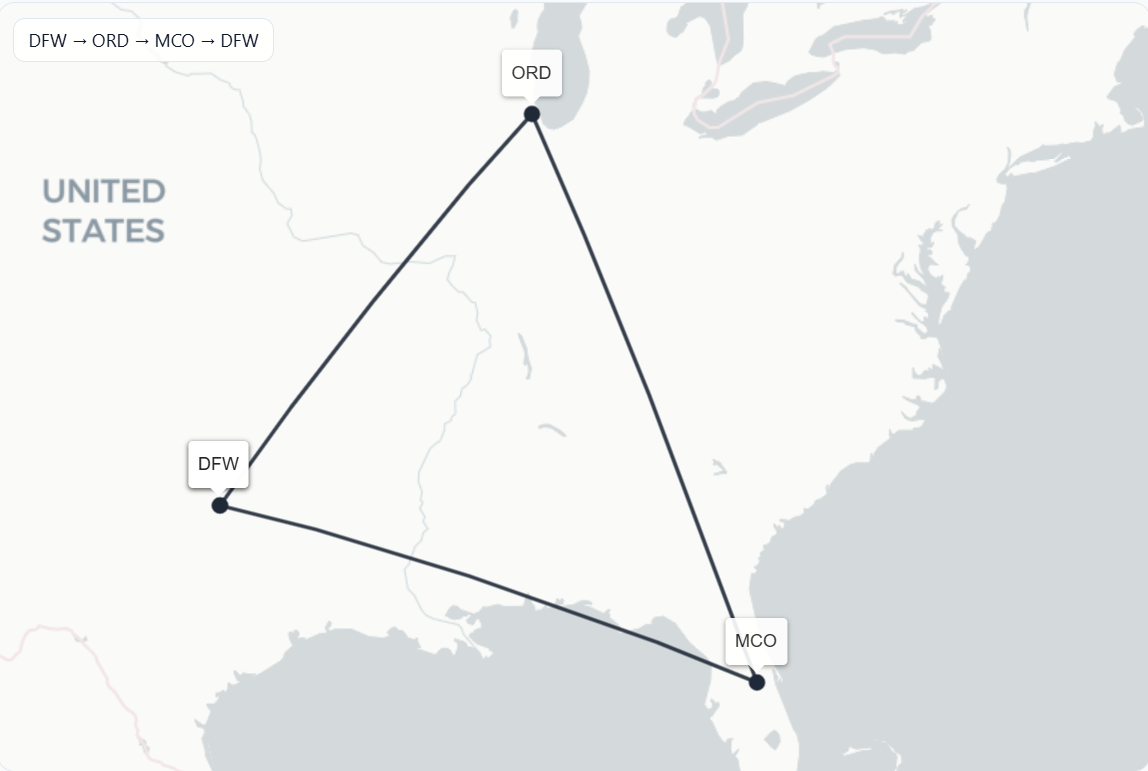
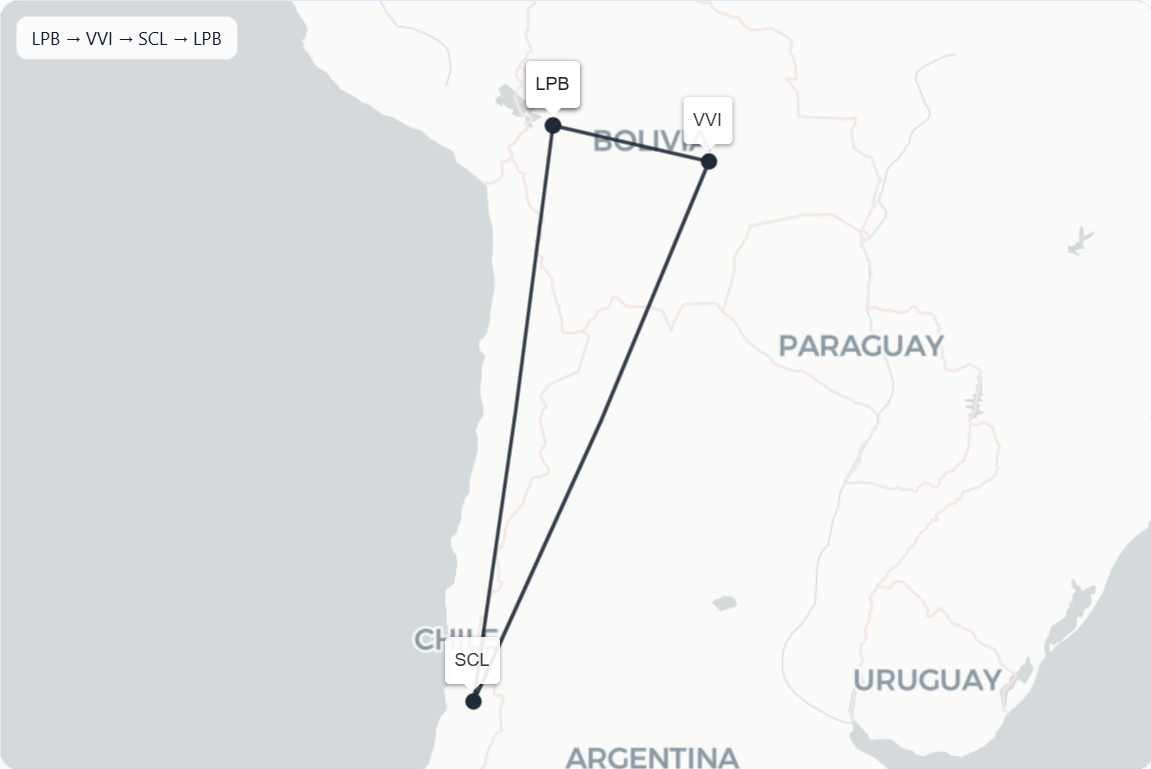
| Multileg triangles (A→B→C→A) | 1 079 |
Definitions: “Simultaneous” means two routes overlap in schedule dates (with a ±2 day buffer). “Seasonal route swap” means routes do not overlap in time.
Routes per flight number (sorted by average)
| Airline | Avg. routes | Max routes | Total flight numbers | >1 route |
|---|---|---|---|---|
|
Southwest Airlines (WN)
|
8.792 | 27 | 4 946 | 4 669 |
|
American Airlines (AA)
|
6.571 | 21 | 6 210 | 5 434 |
|
Allegiant Air (G4)
|
5.675 | 22 | 2 877 | 2 634 |
|
United Airlines (UA)
|
3.248 | 12 | 4 927 | 3 553 |
|
Delta Air Lines (DL)
|
2.276 | 32 | 5 006 | 2 865 |
|
IndiGo (6E)
|
1.255 | 6 | 2 983 | 658 |
|
easyJet (U2)
|
1.222 | 4 | 5 612 | 1 180 |
|
China Eastern Airlines (MU)
|
1.173 | 3 | 3 322 | 533 |
|
China Southern Airlines (CZ)
|
1.144 | 4 | 3 200 | 425 |
|
Ryanair (FR)
|
1.013 | 3 | 8 052 | 99 |
The patterns in the data point to a deliberate numbering strategy rather than an acute shortage. This leads us to three recurring patterns.
1) Out-and-back (same route)
Another variant is that the same flight number is used for both directions on the same route (A→B and B→A). It is still the same route pair, but two directions. For a user, it can look like “the same flight,” but in practice route and time context are required to interpret it correctly.
| Airline | Out-and-back numbers | Share of airline's numbers |
|---|---|---|
|
American Airlines (AA)
|
4 685 | 75.44 % |
|
Delta Air Lines (DL)
|
2 285 | 45.65 % |
|
Allegiant Air (G4)
|
985 | 34.24 % |
 Alaska Airlines (AS)
|
417 | 18.05 % |
|
Southwest (WN)
|
192 | 3.88 % |
Some airlines consistently favor out-and-back patterns, while others hardly use them at all.
2) Seasonal route swaps
A common pattern in the data is that the same flight number is used on different routes at different times of the year. A route may operate in spring and early summer, then be replaced by another route later in the season.
In our period, we see examples where a flight number is used on one route in March–June and then appears on another route in August–October. This is a controlled way to reuse numbers: the number is free once the first route drops out of the schedule.
United Airlines UA228
Ryanair FR638
 Lufthansa LH844
 Air France AF86
China Eastern MU2613
China Southern CZ3245
IndiGo 6E1439
Air France AF86
China Eastern MU2613
China Southern CZ3245
IndiGo 6E1439
 Qantas QF1278
 LATAM LA505
 GOL G31107
3) Multileg – same number across multiple segments
At the same time, there are cases where the same flight number appears multiple times on the same day. It can be different departures, different directions, or different legs. The number is still correct, but it requires close attention to date, time, and route to understand what it refers to.
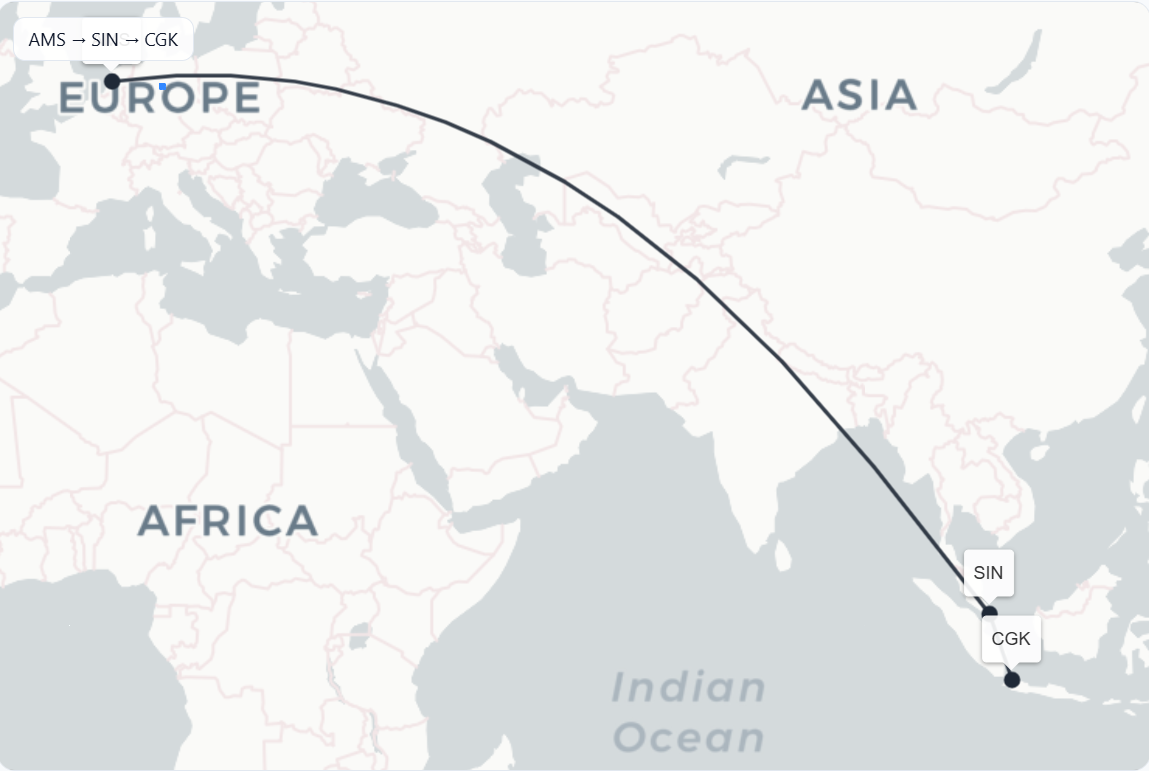
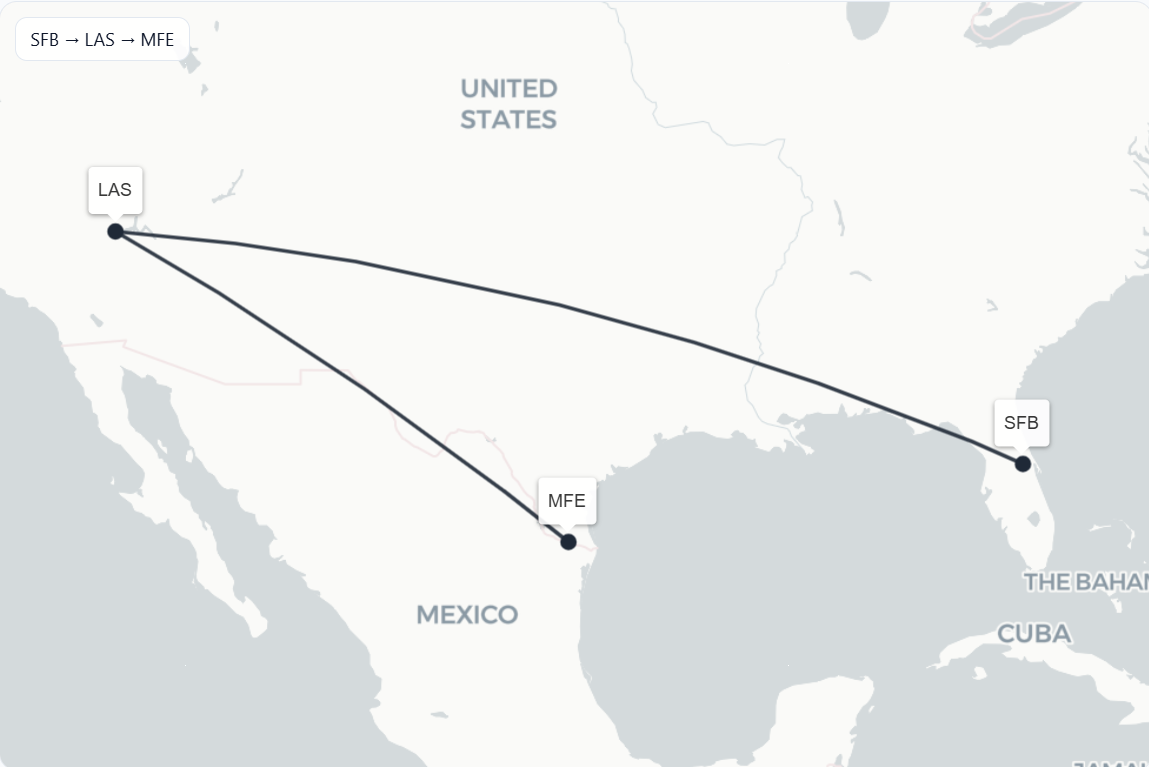
Chain examples (A→B→C)
Two real chain examples:
Triangle examples (A→B→C→A)
Two clear triangles in practice:
The patterns are clear. Why reuse flight numbers then?
In short: flight numbers are not used as unique IDs. In our data, we mainly see three patterns: seasonal route swaps, out-and-back on the same route, and multileg chains or triangles.
- Cost: New flight numbers impact timetables, booking systems, displays, and reporting.
- Stability: Reusing numbers in a controlled way creates less confusion than frequent changes.
- Operational logic: The same number across multiple legs clarifies rotations and planning.
- History: Many systems are built around existing number series.
That said, this text is written by an aviation enthusiast, not by anyone at an aviation authority or an airline. The data is based on FlightsFrom (Cirium) and has been reproduced as accurately as possible. If you have improvements or feedback, we'd love to hear from you. If you found the article informative, feel free to link to flightinformation.com/dia/flight-number.
The editorial team at Flightinformation.com
[email protected]
Published: 2026-01-24
Updated: 2026-01-26
Data source: 2026-01-15
Verified period: 2026-01-21 → 2026-12-09